
Dental Implants vs. Bridges: Which Option is Right for You in 2024?
June 7, 2024
Dental Implants
Missing teeth can impact your smile, confidence, and even your ability to chew properly. Fortunately, modern dentistry offers two popular solutions for replacing missing teeth: dental implants and dental bridges. But with both options available, how do you decide which one is right for you? Here’s a breakdown of dental implants vs. bridges to help you make an informed decision in 2024.
Dental Implants: A Standalone Solution
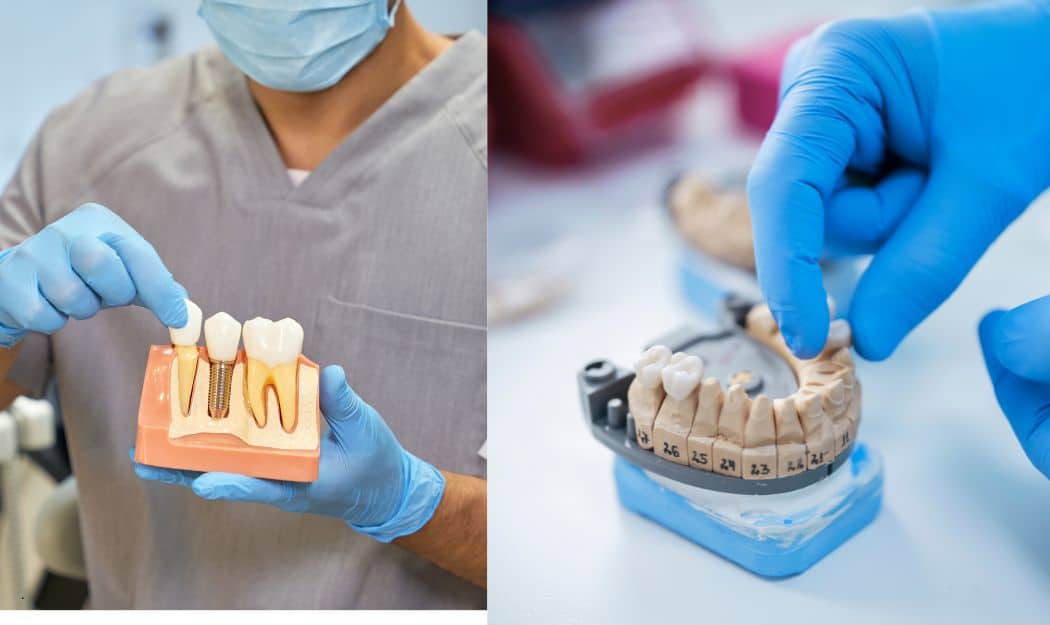
Dental implants are small, biocompatible titanium posts surgically implanted in your jawbone. These implants act as artificial tooth roots, providing a stable foundation for crowns, bridges, or dentures. They offer several advantages:
Durability: Dental implants are intended to last a lifetime with proper maintenance, thus they are a long-term investment.
Improved Functionality: Implants stimulate jawbone growth, preventing bone loss and ensuring optimal functionality when chewing.
Natural Appearance: Crowns attached to implants are custom-designed to blend seamlessly with your existing teeth, creating a natural-looking smile.
Standalone Restoration: Implants don’t rely on neighboring teeth for support, preserving the health of your surrounding teeth.
Dental Bridges: Connecting the Gap
Dental bridges are tooth replacements anchored to your existing healthy teeth on either side of the gap. They are typically made of porcelain fused to metal and offer a strong and aesthetically pleasing solution. Here are some key benefits of bridges:
Cost-Effective: Bridges are generally less expensive than implant-supported restorations, making them a more budget-friendly option.
Faster Procedure: Bridge placement is typically a less invasive and quicker procedure compared to implant surgery.
Effective Solution: Bridges can be a viable option for replacing one or several missing teeth, restoring functionality and aesthetics.
Factors to Consider When Choosing Between Implants and Bridges
The best choice for you depends on several factors:
Number of Missing Teeth: Implants are suitable for replacing a single tooth or multiple teeth, while bridges are typically used for replacing one to three missing teeth.
Jawbone Health: Dental implants require sufficient jawbone density for successful placement. If bone loss is present, bone grafting procedures might be necessary before implant surgery.
Overall Health: Certain medical conditions might impact your candidacy for implant surgery.
Budget: Dental implants are typically a more expensive option compared to bridges.
Desired Longevity: Implants offer a long-term solution, while bridges may need to be replaced after 10-15 years on average.
Consulting Your Dentist: The Key to the Right Choice
Ultimately, the best way to determine whether dental implants or bridges are right for you is to schedule a consultation with your dentist in Edinburg. They can assess your individual situation, including your oral health, jawbone density, and overall health. Based on your specific needs and preferences, they can recommend the most suitable option for achieving a healthy and confident smile.
Remember, both dental implants and bridges are valuable tools for replacing missing teeth. By understanding the advantages and considerations of each option, and with the guidance of your dentist in Edinburg, you can make an informed decision and invest in a solution that best suits your long-term oral health goals.
Recent Post

October 6, 2026
How to Clean Dentures: A Daily Care Routine

September 25, 2026
Signs of Cavities in Children: What Parents Should Know
September 17, 2026
How Long Do Dentures Last? Signs to Replace Them

September 14, 2026
What Foods Can You Eat After Dental Implant Surgery?

September 8, 2026
10 Signs You May Need Root Canal Treatment
Categories
Dental Implants (11)
Patients love it here

My husband and I visited Palm Valley Dental, and it was a rewarding experience. Dr. Torres and Dr. Trevino are so patient, knowledgeable and professional. Caleb, the Dental Hygienist is also very thorough and courteous. The office staff are so pleasant and helpful as well.


Adalia De Luna
Literally, the first time ever at dentist, went in terrified, left informed on my dental care/plan, and scheduled my return visit for the in depth cleaning. Overall, great experience, staff & doctor were attentive, professional and very receptive to all my questions and even the nervousness I displayed.

Sandra Palomo
I love this place. Aside from the amazing and comprehensive dental services, customer service and my time are really important to me. It is rare to find everything I care about in one place.

Karla DeWald
Dr. Treviño and staff are wonderful!! Very clean environment. Dr is so good I had a filling adjustment without being numbed up!! If that doesn't tell you how good they are, I don't know what will!!

Issa Garcia
I love this place. Aside from the amazing and comprehensive dental services, customer service and my time are really important to me. It is rare to find everything I care about in one place.
Karla DeWald
After experiencing a few negative experiences at a previous dental practice, I cautiously decided to try this new dental place. I had a wonderful first visit here and felt a great relief after my appointment. Everyone I encountered was so kind and friendly, and all my concerns and questions were addressed. I highly recommend. 😊